 Nepali
 English


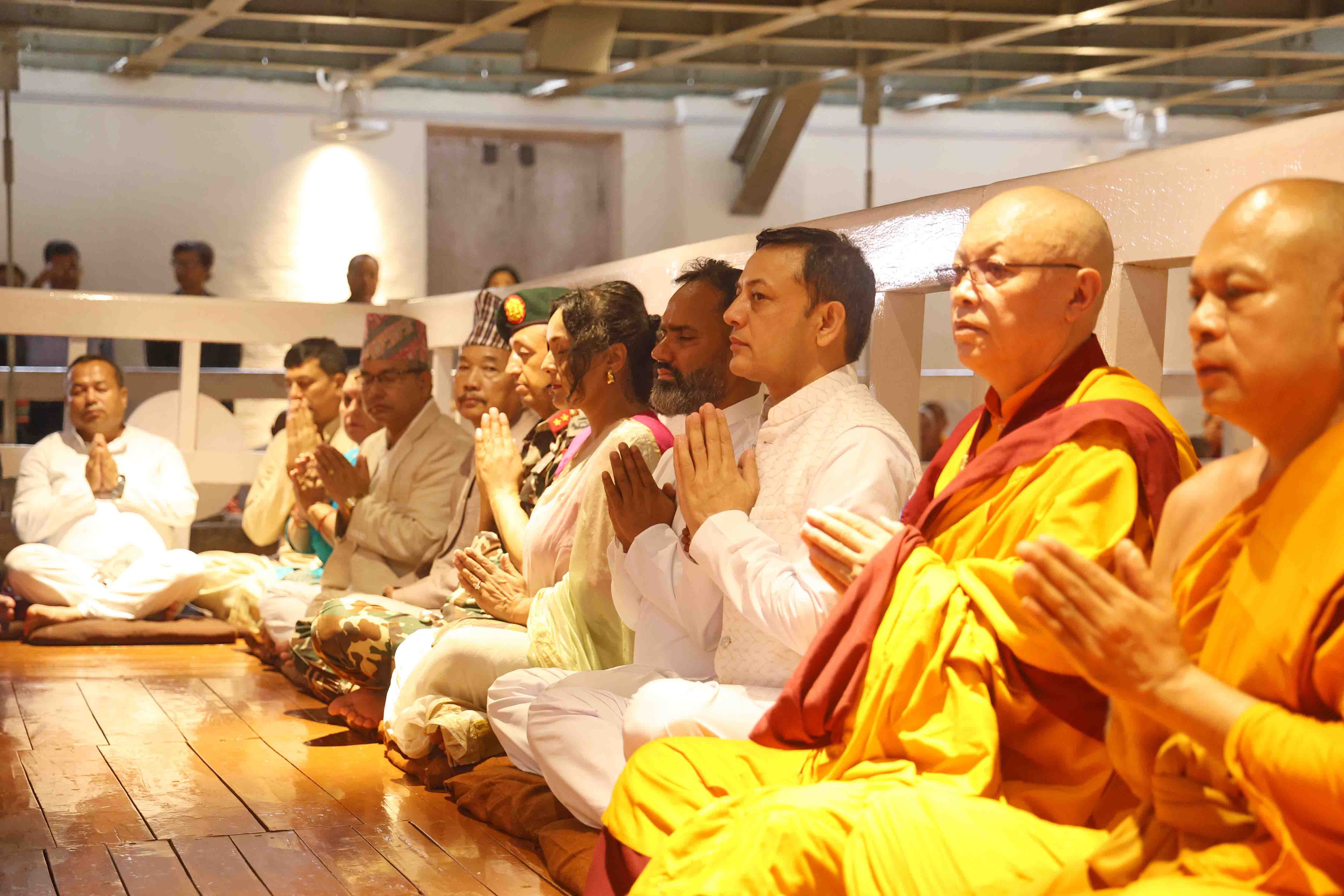
May 1, 2026, Lumbini: The 2570th Buddha Jayanti was celebrated with great devotion and ceremonial grandeur in Lumbini, the birthplace of Lord Buddha, through a series of special programs organized by the Lumbini Development Trust.
The sacred site was beautifully decorated for the occasion, creating a serene and festive atmosphere. Although the main event was originally scheduled to begin at 5:00 a.m., it was disrupted by rainfall and had to be postponed. The program eventually commenced at around 8:30 a.m. and concluded within an hour.
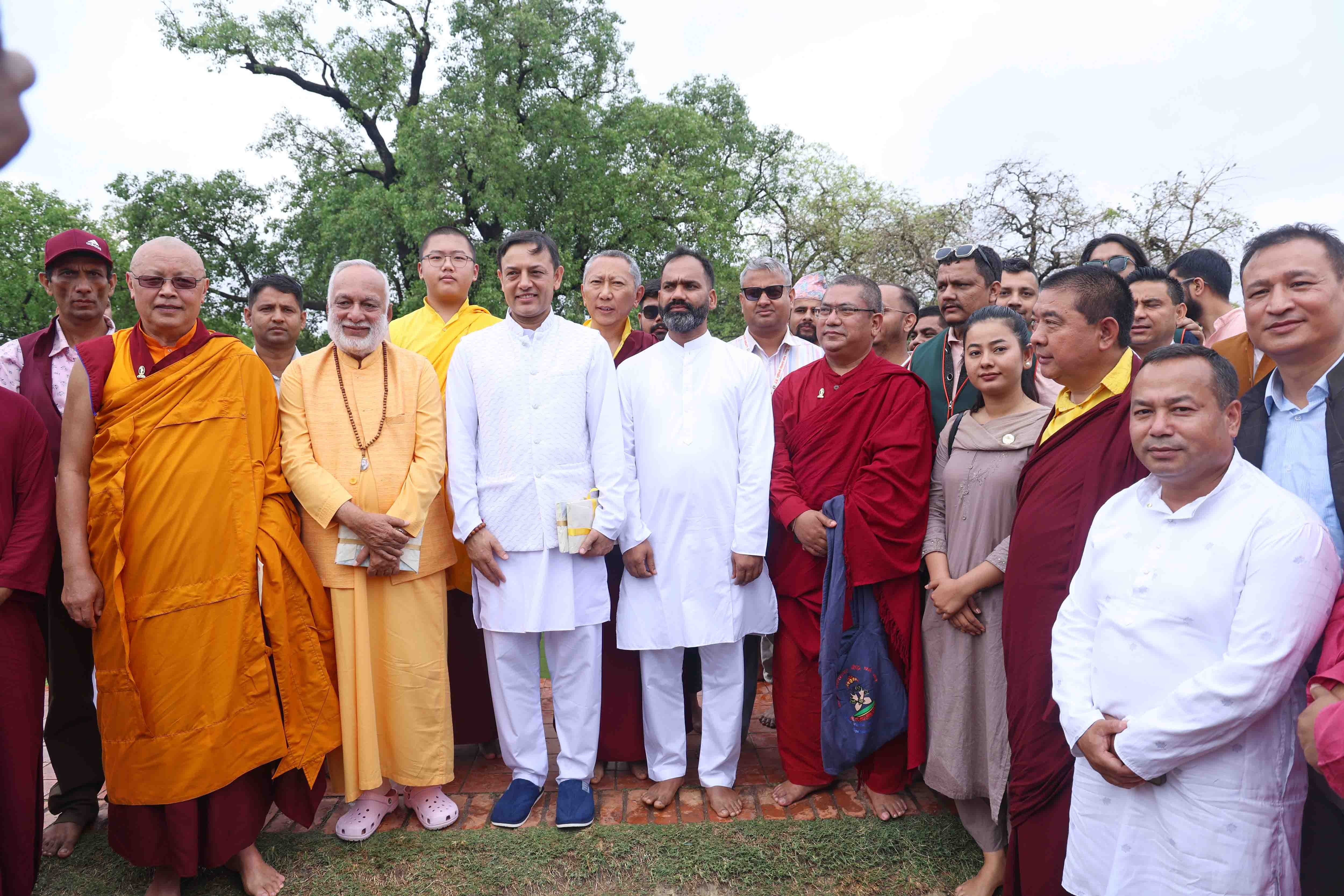
The program was attended by prominent dignitaries, including Speaker Dol Prasad (DP) Aryal and Minister for Culture, Tourism, and Civil Aviation Khadga Raj Paudel. Members of both the federal parliament and provincial assemblies were also present on the occasion. They were joined by monks, nuns, and lay devotees from various monasteries in Lumbini.
All participants gathered at the sacred Mayadevi Temple, where they offered prayers and engaged in meditation. The religious rituals were performed according to the traditions of the three major Buddhist schools—Theravada, Mahayana, and Vajrayana—symbolizing harmony within diversity.
Buddha Jayanti, observed on the full moon day of Baisakh, commemorates the birth, enlightenment, and passing away (Mahaparinirvana) of Lord Buddha. On this auspicious day, Lumbini was filled with both domestic and international visitors, making the area vibrant and bustling.
The event was also attended by Krishna Bahadur Gharti, Chief of Lumbini Province, and Lila Pieters Yahia, the United Nations Resident Representative to Nepal, highlighting the global significance of Lumbini as a revered spiritual and cultural heritage site.
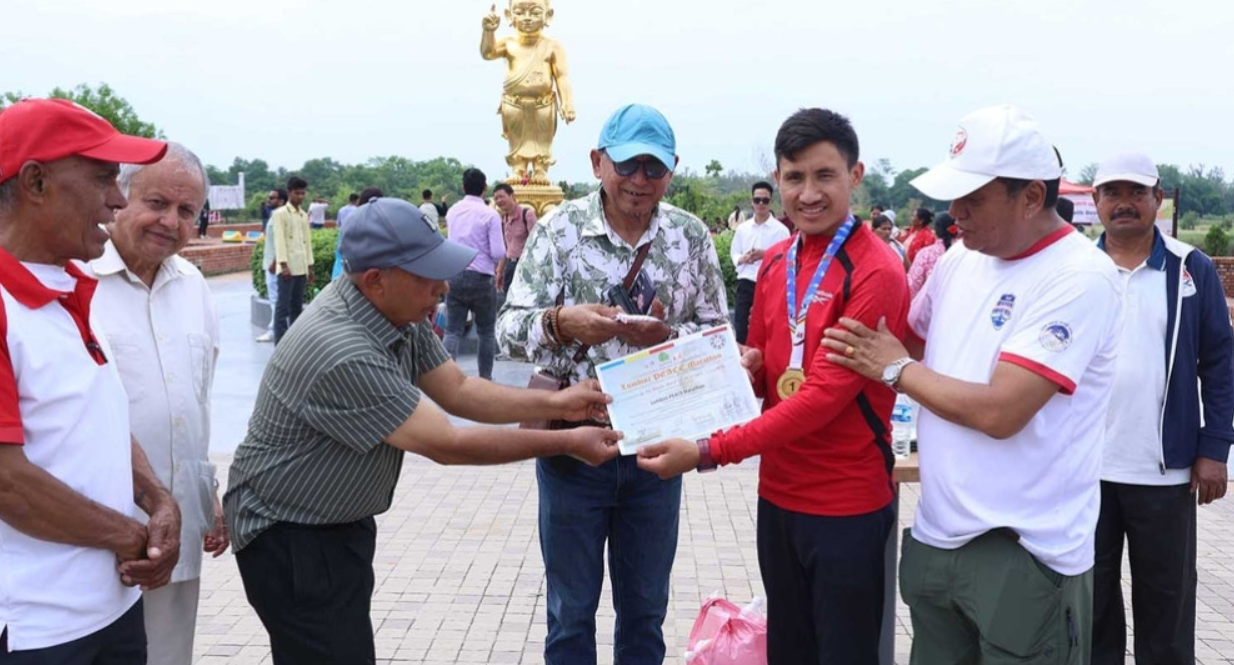
At the Lumbini Peace Meditation Marathon, organized to mark the 2570th Buddha Jayanti and promote spiritual tourism through sports, Kul Bahadur Basnet won the 21 km race with a time of 1 hour, 14 minutes, and 7 seconds, followed by Prakash Singh Air and Sunil Thapa Magar in second and third place, while in the 7 km category, Santosh Nath Yogi secured first place, with Shiv Shankar Tharu and Bal Bahadur Rai finishing second and third respectively; winners in both categories received cash prizes, medals, and certificates, with awards distributed by Vikram Pandey Kaji—goodwill ambassador of the Lumbini Development Trust and Honorary Consul of Greece to Nepal—and lyricist Shripurush Dhakal, as the event, organized with the involvement of the Lumbini Development Trust and local stakeholders, aimed to blend physical activity with the values of peace, meditation, and global harmony associated with Buddha’s teachings.
A four-day Kathmandu–Lumbini cycling tour titled “Cycling for Peace” was successfully organized by the Universal Peace Sanctuary on the occasion of Buddha Jayanti to promote global peace, compassion, and non-violence. The event featured the participation of 108 cyclists and began in Kathmandu on April 28, concluding in Lumbini on Buddha Purnima on May 1, with the route passing through Hetauda, Narayanghat, Kawasoti, Daunne, and Bhairahawa. Upon arrival in Lumbini, thousands of visitors gathered at the Mayadevi Temple, where they meditated under the Bodhi tree, offered special prayers for world peace, and lit lamps. On the same day, the Nepali translation of The Path to Perfect Freedom by Shyalpa Rinpoche was also launched. The book presents practical teachings on inner peace, mindfulness, and spiritual liberation, guiding readers toward achieving lasting freedom from suffering through compassion and wisdom.
Buddha Jayanti was celebrated with great devotion and spiritual fervor at Ramagrama, Devadaha and Tilaurakot, where devotees, monks, and visitors gathered to honor the birth of Lord Buddha through traditional rituals and peaceful reflection. The celebrations included special puja ceremonies, meditation sessions, and the offering of lamps, symbolizing light, peace, and enlightenment. Participants engaged in prayers for global harmony and well-being, while the serene atmosphere of these historic Buddhist sites enhanced the spiritual experience, reinforcing the message of compassion, non-violence, and inner peace associated with Buddha’s teachings.