
 Nepali
 English


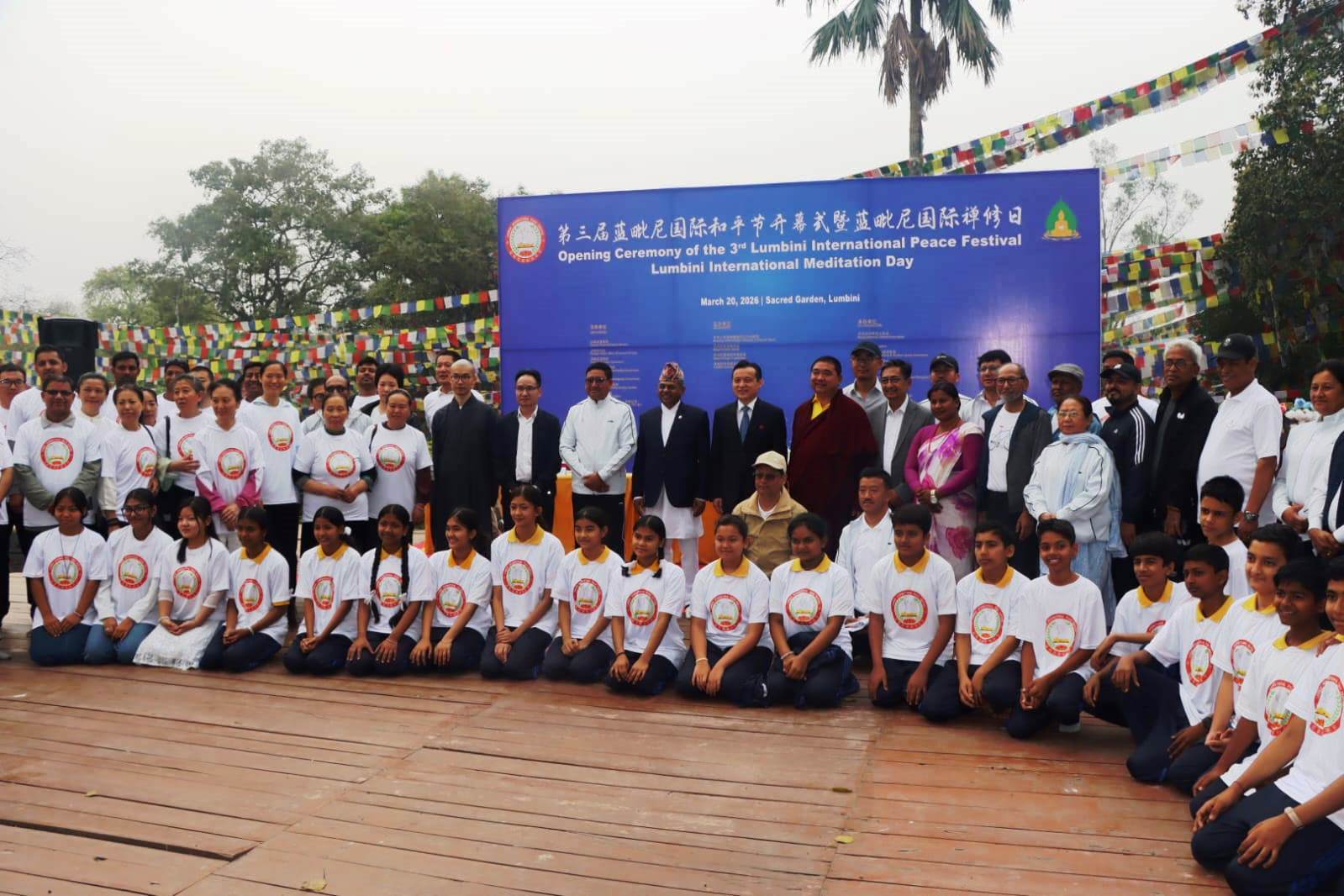
Lumbini, March 21: The Second Lumbini International Peace and Meditation Festival was held in Lumbini, reinforcing its identity as a major spiritual center for Buddhists and an emerging hub for global peace tourism.
Speaking at the opening ceremony, Minister for Culture, Tourism and Civil Aviation Hon. Badri Prasad Pandey stated that Lumbini is not only a sacred destination for Buddhists but also a place of deep significance for peace-loving people around the world. He emphasized that the universal values of peace, unity, harmony, and humanity can be effectively shared globally from this historic site.
The Minister highlighted that the government is actively engaged in preserving Lumbini, which is recognized as a UNESCO World Heritage Sites site. He also noted that Nepal has strong potential to benefit from cultural, spiritual, and adventure tourism, with Lumbini serving as a key destination.
Calling for stronger international collaboration, he urged stakeholders to implement recently signed agreements with Thailand and Cambodia, particularly in areas such as tourism promotion, cultural exchange, and expanded air connectivity.
In his capacity as Chair of the Lumbini Development Trust, Minister Pandey stressed the importance of developing nearby heritage sites—Tilaurakot, Devdaha, and Ramgram—as internationally recognized cities dedicated to peace.
Vice-Chair of the Trust, Dr Lharkyal Lama, described Lumbini as one of the most suitable places in the world for Buddhist meditation. He noted that, as the birthplace of Buddhism and a source of the message of peace, the festival would play a vital role in promoting its global significance.
Chief Executive Officer of the Nepal Tourism Board, Deepak Raj Joshi, stated that such festivals contribute significantly to tourism development and help project a positive image of Nepal internationally. He added that meditation sessions and cultural programs organized during the event would spread a strong message of peace across the world.
Chinese Ambassador to Nepal H.E. Chen Song remarked that China’s continued involvement, including organizing the peace conference for the second time in Lumbini, reflects efforts to strengthen bilateral relations. He expressed confidence that the event would enhance cultural, religious, and people-to-people exchanges among Nepal, China, and other countries.
As part of the event, a large meditation session was held in the garden of the Mayadevi Temple, with the participation of around 100 monks and 400 practitioners.
The festival was jointly organized by the Ministry of Culture, Tourism and Civil Aviation, the Chinese Embassy, and other partner organizations, aiming to promote peace, spirituality, and international cooperation through Lumbini.